
How Slope Gets Harder: Speed, Gradient and Block Density
Published · 1 min read
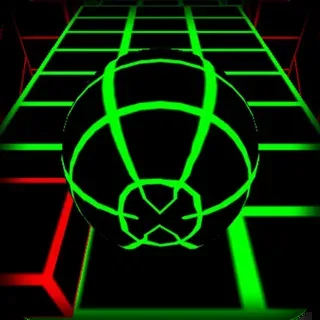
No levels, three dials
Slope never shows a level number, but three things change continuously as you roll: the gradient of the track, the speed of the ball and how often red blocks and gaps appear. The first two are tied together — steeper means faster — and the third rises on its own curve.
Gradient and speed
The slope tilts in stages you can feel as small drops. Each drop bumps the ball's speed and shortens the time between seeing an obstacle and reaching it. Nothing you do slows the ball; the only counter is to look further ahead each time the track tips.
Block density
Early platforms have at most one red block. Later ones have two or three in patterns that leave a single lane open, and the gaps between platforms widen so a wrong lane means a fall rather than a bounce. Around 150 points the safe lane often changes on consecutive platforms, which is where most experienced runs end.
Preparing for the shift
Treat each drop as a signal: re-centre the ball, lift your fingers, and re-read the top of the screen. The players with the highest scores are not faster; they reset their attention every time the slope changes.
More from the blog
- Slope for Beginners: Your First 100 Points
What kills new players, what the speed bands feel like, and the one habit that doubles most people's best in an afternoon.
- Tunnel Rush vs Slope: Which Reflex Runner Suits You
The two most-played reflex runners look alike and feel different. A side-by-side on speed, controls and what each one trains.